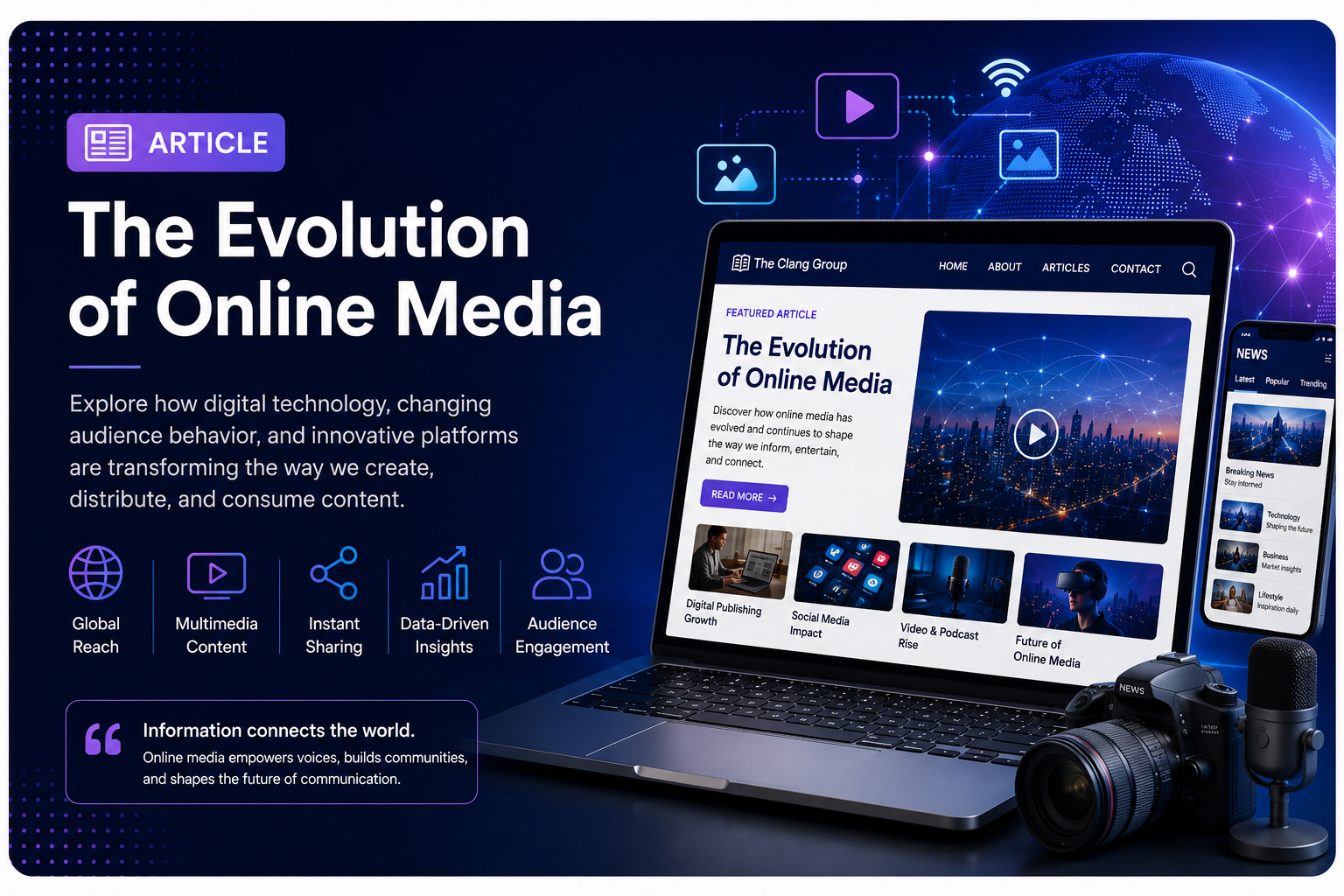
The Evolution of Online Media
Online media has transformed the way people access information, consume content, and interact with global events. Over the past two decades, digital platforms have significantly changed traditional communication models, creating new opportunities for publishers, businesses, and audiences worldwide.
The growth of internet access and mobile technology has accelerated the development of online media, allowing information to be distributed instantly across multiple channels. As a result, digital content has become one of the most influential forces shaping modern communication.
The Rise of Digital Publishing
Digital publishing emerged as a response to increasing demand for fast and accessible information. Newspapers, magazines, and media organizations gradually expanded their presence online to reach wider audiences and provide real-time updates.
This shift enabled publishers to distribute content more efficiently while reducing the limitations associated with traditional print media.
Changing Audience Behavior
Modern audiences consume information differently than previous generations. Mobile devices, social platforms, and digital applications allow users to access content at any time and from virtually any location.
This accessibility has increased expectations for convenience, speed, and personalization in content delivery.
The Impact of Social Media
Social media platforms have become major distribution channels for online media. These platforms enable users to share articles, videos, and updates instantly with large audiences.
The ability to engage directly with content creators and publishers has strengthened audience participation and reshaped traditional communication models.
Multimedia Content Growth
Online media now includes a wide variety of content formats, including text articles, videos, podcasts, interactive graphics, and live broadcasts. Multimedia experiences provide audiences with multiple ways to consume and engage with information.
Publishers increasingly combine different formats to improve accessibility and enhance user engagement.
Technology and Content Distribution
Advanced technologies support efficient content distribution across websites, mobile applications, and digital platforms. Content management systems, cloud infrastructure, and automated publishing tools help organizations deliver information quickly and consistently.
Technology also enables publishers to analyze audience behavior and optimize content strategies based on performance data.
The Importance of Content Quality
As the volume of online information continues to increase, content quality remains a critical factor. Accurate, reliable, and well-researched information helps establish credibility and build audience trust.
Organizations that prioritize quality content often achieve stronger engagement and long-term audience loyalty.
Challenges in Online Media
Despite its advantages, online media faces challenges such as misinformation, content saturation, privacy concerns, and increasing competition for audience attention.
Media organizations must continually adapt their strategies to maintain credibility while responding to evolving user expectations.
The Future of Digital Media
Emerging technologies such as artificial intelligence, personalized content delivery, virtual reality, and advanced analytics are expected to influence the future of online media. These innovations may further enhance user experiences and improve content accessibility.
As technology evolves, publishers will continue exploring new methods for delivering engaging and informative content to diverse audiences.
Conclusion
Online media has become an essential component of modern communication and information sharing. By combining technology, creativity, and responsible publishing practices, digital media organizations can continue to provide valuable content that informs and connects audiences around the world.
The continued evolution of online media will play a significant role in shaping how people discover information, engage with content, and participate in global conversations.